NHS Band 2 Pay Calculator — 2026/27
NHS Band 2 Salary Overview
Annual Salary
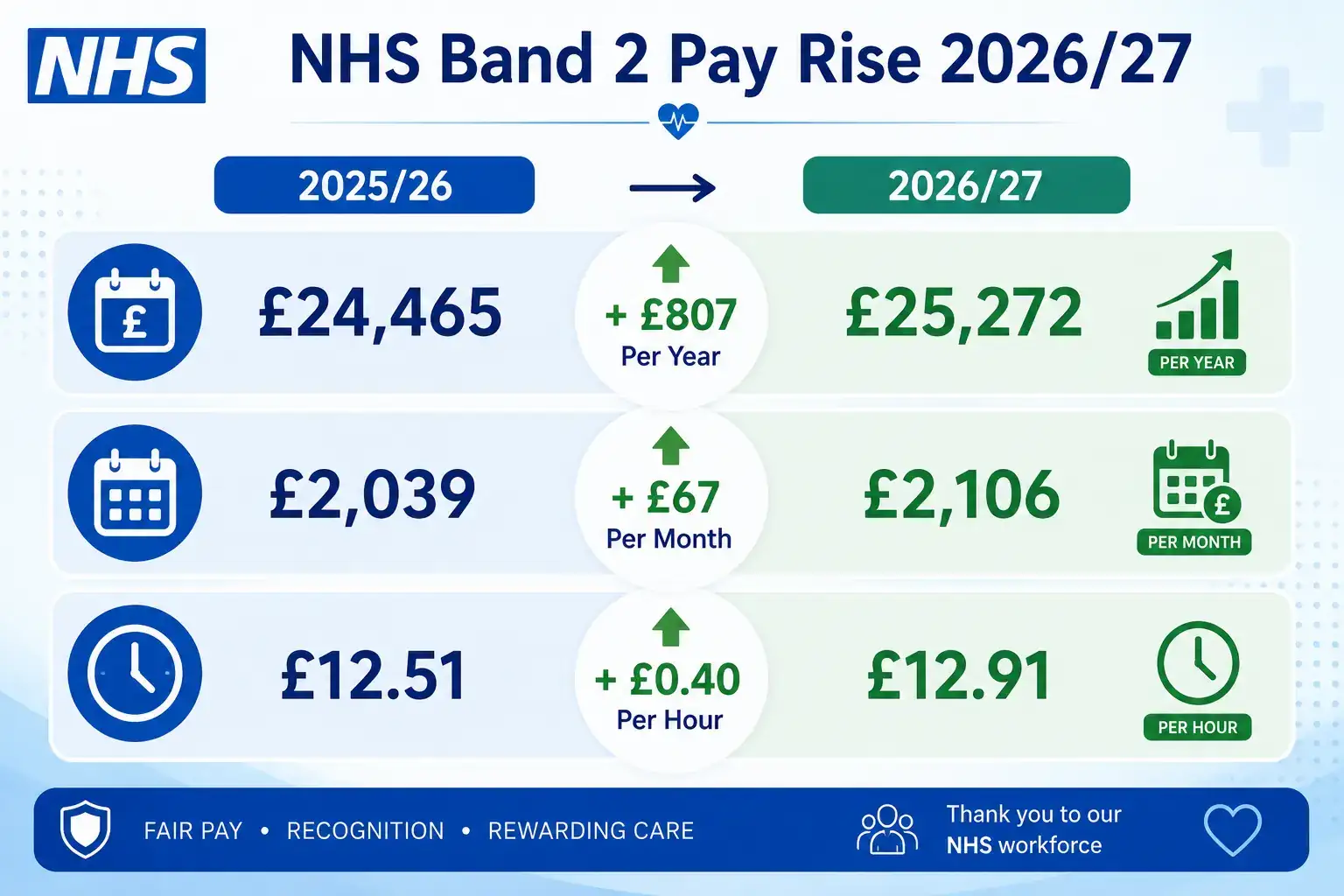
The NHS Band 2 pay for the 2026/27 pay year begins at £25,272 for employees working 37.5 hours per week in England. This figure applies in England from 1st April 2026. Before this date, employees were receiving £24,465. This represents an annual pay increase of £807.
Monthly Salary
The monthly salary for the NHS Band 2 employee is £2,106 per month before deduction in 2026/27. From 2025 to 1st April 2026, the monthly earnings were £2,039, representing an increase of £67 per month.
Although actual net pay depends on tax, pension contributions, National Insurance, Student loan repayments, and any other additional shift enhancements. Employees who work nights, weekends, Bank Holidays, or overtime can earn significantly more than the basic salary.
Weekly Salary
Based on the updated pay scale, NHS Band 2 staff earn £486 before deductions. These earnings can be increased if employees regularly work overtime, bank holidays, weekends, and night shifts. Likely, if employees work part-time, this figure goes down.
Hourly Rate
The current NHS Band 2 Hourly rate for 2026/27 is £12.91. It increased 40 pence per hour as compared to 2025/26. Staff who work in unsocial hours, like night, weekend, and bank holiday shifts, may receive enhanced rates.
NHS Band 2 Take-Home Pay Calculator
NHS Band 2 take-home pay is the amount you receive after deductions like income tax, National Insurance, and NHS pension. These deductions reduce your overall take-home pay.
Income Tax
£212 per month — 20% basic rate on earnings above the £12,570 personal allowance.
National Insurance
£85 per month — 8% NI on earnings between £12,570 and £50,270.
NHS Pension
£137 per month — 6.5% of pensionable pay, deducted before income tax.
Estimated Net Salary
~£1,673 per month take-home after all standard deductions.
Tax
For the 2026/27 tax year, £12,570 of your income is tax-free. The tax applies to the remaining amount, which is £12,702. Most of the Band 2 staff pay the £2,540 tax yearly or £212 per month, which is 20% of the annual income.
Because Band 2 is an entry-level band under the NHS Agenda for Change (AfC) pay structure, the basic tax is charged.
Annual Salary: £25,272 · Personal Allowance: £12,570 · Taxable Income: £12,702
Income Tax Rate: 20% · Estimated Annual Tax: £2,540
This tax rate may increase if you work overtime, unsocial hours, weekends or bank holidays. However, most employees of this band only pay basic-rate tax and don't pay the higher tax rate of 40%.
Use the NHS Band 2 Take-home Pay Calculator above to figure out how this tax affects your monthly and annual salary.
National Insurance
National Insurance (NI) is deducted from your salary for the State Pension and certain government perks. For the 2026/27, NHS Band 2 employees pay 8% NI on earnings between £12,570 and £50,270 per year.
Annual Salary: £25,272 · NI-Free Allowance: £12,570 · NI-Taxable Earnings: £12,702
NI Rate: 8% · Estimated Annual NI: £1,016 · Estimated Monthly NI: £85
Like Income tax, most NHS Band 2 employees pay the basic National Insurance rate.
NHS Pension
The NHS Band 2 employees contribute 6.5% of their pensionable earnings to the NHS Pension Scheme, who earn £25,272 per year. This means £1,643 per year, or around £137 per month, is deducted from the employees' salaries. This is a defined benefit scheme, meaning your retirement pension depends on your earnings and duration of NHS service.
Annual Salary: £25,272 · Pension Contribution Rate: 6.5%
Annual Contribution: £1,643 · Monthly Contribution: £137
Moreover, the NHS Pension is deducted before the income tax. The major advantage is that it lowers the tax burden. This is the most valuable scheme because it provides a lot of benefits in the UK Public sector, like guaranteed retirement income for life, family and survivor benefits, protection if you can't work due to health issues, and inflation-linked benefits that protect spending power.
Net Salary
Net salary, often referred to as take-home pay, is the amount you receive after all deductions. This is the amount that the NHS employees actually received after all deductions.
For the 2026/27 pay year, Band 2 NHS staff in England earn a gross salary of £25,272. After all deductions, the employees take home pay approximately £21,000–£22,000 per year. The exact amount may vary due to membership, tax code, student loan repayments, and other personal circumstances.
Gross Monthly Salary: £2,106 · Total Monthly Deductions: ~£433
Estimated Monthly Take-Home Pay: ~£1,673
NHS Band 2 Unsocial Hours Pay
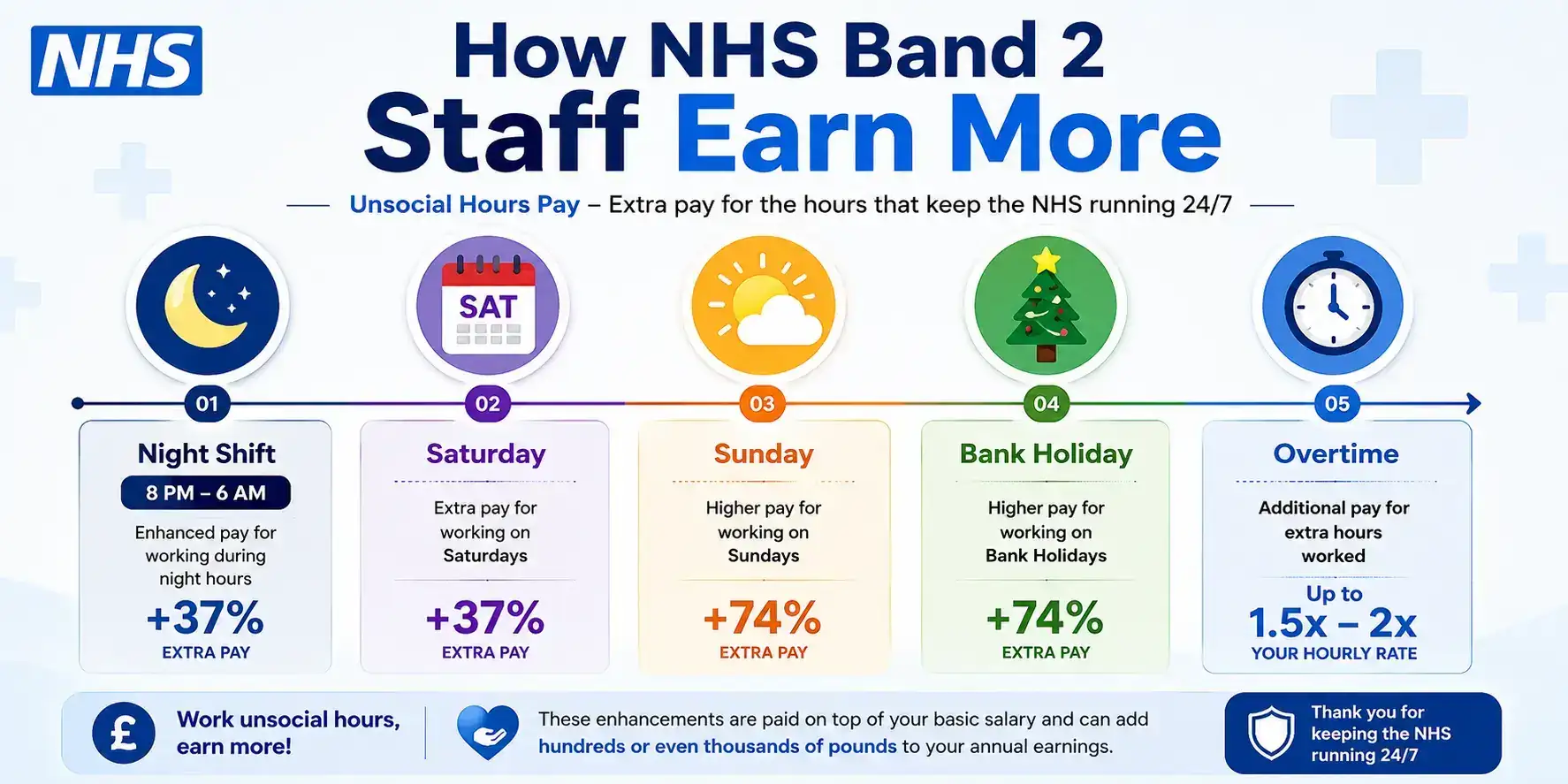
Unsocial Hours Pay is additional compensation paid to NHS employees who work outside standard daytime hours. This is the best opportunity to earn more than the basic salary. These enhancements can add hundreds or even thousands of pounds to annual earnings. This amount depends on your shift pattern, contracted hours, and the number of extra shifts you work in the whole year.
Night Shifts
The night shift's enhancement window timing is from 8:00 PM to 6:00 AM. Band 2 employees receive a 37% salary enhancement when working in this shift. This is the most common way NHS Band 2 employees earn more.
Moreover, some staff members don't know that only the enhancement window qualifies for this increment. For instance, if your shift timing is 7:00 PM to 7:30 AM, the enhancement rate applies only between 8:00 PM and 6:00 AM. The remaining hours will be paid at the normal rates. So, it's important to keep in mind while calculating your monthly take-home pay.
Weekend Pay
Healthcare services also work at weekends, creating more opportunities for NHS staff. This can add a substantial boost to NHS Band 2 earnings. For the first three Bands, night shift and Saturday both attract 37% enhancement, while Sunday shifts attract an incredible 74% enhancement.
Bank Holiday Pay
Bank holidays don't affect the healthcare services. Like the Sunday shift, the Bank holidays also provide 74% uplift to Band 2 employees. So, this holiday shift can make a big difference in the monthly pay slip.
Overtime Pay
Many NHS employees confuse unsocial hours and overtime pay, although both these are totally different. Unsocial Hour Pay is extra payment for the time you work, while Overtime Pay is additional pay for how many hours you work.
Overtime is only for those employees who work more than the standard 37.5-hour NHS working week. Usually, NHS Band 2 employees get time-and-a-half (1.5×) and Bank Holiday overtime is paid at double time (2×), depending on local arrangements.
This rule doesn't apply to the part-time staff. Their additional hours are considered as normal hourly rate until they complete their total weekly hours exceed the standard full-time threshold.
NHS Band 2 London Weighting (HCAS)
Living costs in London are significantly higher than in any other city in the UK. Therefore, the NHS provides the Highest Cost Area Supplement (HCAS) to its employees, which is called London Weighting. If you're serving within London or the surrounding areas, you'll receive an extra allowance on top of your standard NHS Band 2 pay. This allowance depends on whether your workplace is within the Inner London, Outer London, or Fringe zone.
Inner London
Min: £5,794 · Max: £8,746
Outer London
Min: £4,870 · Max: £6,137
Fringe Area
Min: £1,346 · Max: £2,270
Inner London
Inner London employees receive the highest percentage of HCAS support due to the high-cost region. The HCAS rate is 20% of basic salary with a minimum supplement of £5,794 and a maximum supplement of £8,746. The standard 20% of basic salary produces a lower figure for NHS Band 2 staff as compared to the minimum supplement. That's why eligible employees get the minimum Inner London supplement of £5,794.
Outer London
Outer London trusts also receive the Highest Cost Area supplement. But their guaranteed percentage and payments are lower compared to Inner London. The HCAS rate is 15% of basic salary with a minimum supplement of £4,870 and a maximum supplement of £6,137. Like Inner London, the 15% figure is less than the minimum supplement, so a minimum supplement of £4,870 is applied to Band 2 employees.
Fringe
NHS staff working in eligible Fringe locations also receive HCAS payments. Although the supplement is less than the Inner and Outer London rates, it still adds a valuable increment in the salary. The HCAS rate is 5% of basic salary with a minimum supplement of £1,346 and a maximum supplement of £2,270.
Use the NHS HCAS Calculator to calculate your exact London Weighting supplement.
NHS Band 2 Job Roles
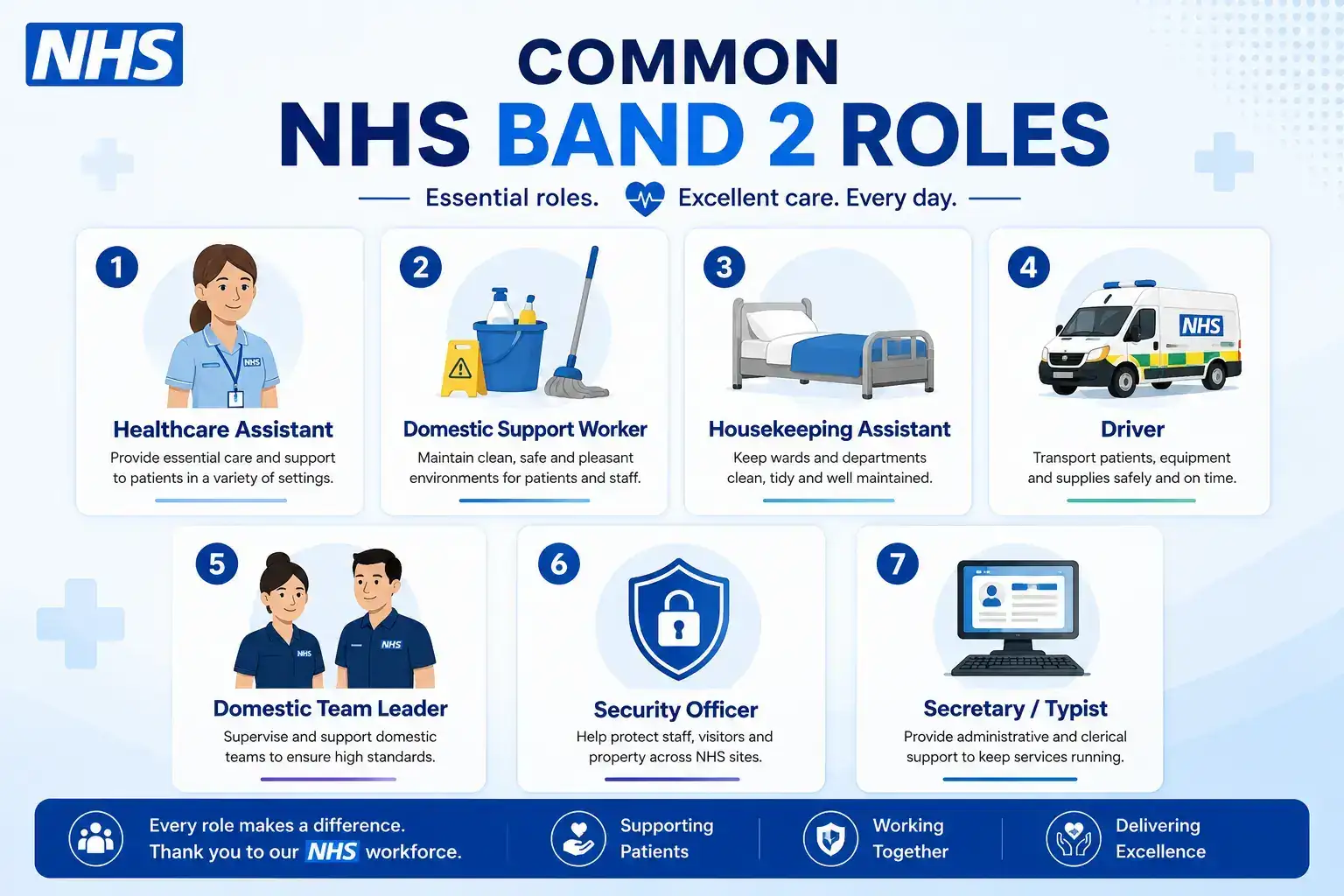
NHS Band 2 covers a wide range of essential support roles across healthcare services. Although they don't involve direct clinical care, they're essential for maintaining patient comfort, safety, and day-to-day operations across the NHS.
Healthcare Assistant (HCA)
- Assist patients' mobility and personal care
- Monitor basic observations
- Provide emotional support to patients
- Prepare beds and clinical areas
Domestic Support Worker
- Clean rooms and wards
- Sanitize surfaces and equipment
- Manage waste disposals
- Follow infection prevention procedures
Housekeeping Assistant
- Provide meals and refreshments
- Replenish ward supplies
- Prepare patient areas
- Support patient wellbeing
Driver
- Transport patients between facilities
- Deliver medical equipment
- Move laboratory samples
- Maintain vehicle safety standards
Domestic Team Leader
- Manage cleaning staff
- Schedule shifts
- Conduct quality inspections
- Ensure NHS policy compliance
Security Officer
- Monitor hospital entrances
- Support emergencies
- Manage access control
- Conduct security patrols
Secretary / Typist
- Manage appointments
- Prepare medical documents
- Handle patient correspondence
- Support healthcare and consultant teams
NHS Band 2 Pay Across UK Nations
The pay of an NHS Band 2 employee depends on the area. Although the NHS works across the United Kingdom, salaries differ from area to area.
England
In England, the salary of NHS staff boosted from £24,465 in 2025/26 to £25,272 in 2026/27. London staff receive the High Cost Area Supplements (HCAS). The London Weighting provides 20% extra above the standard Band 2 salary.
Scotland
Scotland offers the highest salary to its NHS employees among the UK nations.
- £26,696 per year (Point 1) — £14.22 per hour
- £28,988 per year (Point 2) — £15.44 per hour
Wales
NHS Wales has its own Agenda for Change which differs from England, Scotland and Northern Ireland. For the 2026/27 pay years, Band 2 staff receive a single pay rate rather than progressing through multiple salary points. There's no pay point progression system; all employees get the same basic salary.
- Annual Salary: £26,300
- Approximate Monthly Salary: £2,192
- Approximate Weekly Salary: £506
- Approximate Hourly Rate: £14.03 (based on a 37.5-hour working week)
Northern Ireland
Northern Ireland also offers the same salary as England, which is £25,272 per year.
- Annual Salary: £25,272
- Monthly Salary: Approximately £2,106
- Weekly Salary: Approximately £486
- Hourly Rate: Approximately £12.91
Like other areas, the Band 2 staff can increase their salary by working unsocial hours, overtime opportunities, weekend work, and Bank Holiday shifts.
NHS Band 2 Salary Comparison Across the UK
The table below compares the latest 2026/27 Band 2 salaries to help you see where healthcare support staff earn the most.
| Region | Annual Salary |
|---|---|
| Inner London | £31,066 |
| Outer London | £30,142 |
| Scotland (Top Point) | £28,988 |
| Scotland (Point 1) | £26,696 |
| Wales | £26,300 |
| Fringe | £26,618 |
| England | £25,272 |
| Northern Ireland | £25,272 |
NHS Band 2 Benefits
Annual Leave
Generous annual leave entitlement that increases with NHS service length.
NHS Pension
Defined benefit pension scheme providing guaranteed retirement income for life.
Sick Pay
Occupational sick pay entitlement, more generous than statutory sick pay.
Maternity & Paternity Leave
Enhanced maternity and paternity leave provisions beyond statutory minimums.
Discounts & Perks
NHS staff discounts on retail, restaurants, gyms, and more through NHS Discounts.
Travel & Cycle to Work
Cycle to Work salary sacrifice scheme and travel support options.
Career Development
Clear progression pathways and learning opportunities across the NHS Agenda for Change structure.
The Bottom Line
NHS Band 2 offers more than just a basic salary. With benefits such as the NHS Pension Scheme, paid leave, overtime opportunities, and career progression pathways, it remains one of the most popular starting points within the NHS. While the standard salary provides a solid foundation, your actual earnings can vary depending on your location, working hours, shift pattern, and additional enhancements.
Use the NHS Band 2 Salary Calculator ↑
Full NHS Pay Calculator
See take-home pay for any NHS band, including all deductions and enhancements.
Calculate Full Pay →